
Garmin GPSMAP 66s - Power for Sea Kayaking, General Expedition and two way off grid comms
20/06/25 09:48
By 'expedition' I mean multi-day adventures away from civilisation. That is - no resupply every day, just occasionally.
I've used many Garmin GPS devices when sea-kayaking over the years. On land I tend to use a Fenix watch, which is great for having a map on your wrist. But on the sea I prefer a proper larger screen unit with buttons and an easy way to keep powered over many days.
It also has to sit securely on my spray deck so I can glance at it from time to time. Pressing any buttons easily to do various navigation things is good too. That's a topic really for another post I guess.
One important point: It's quite important to keep your eyes up to see where you are going, not 'head down' taking the GPS on a journey. I have been caught out like this when starting to use a GPS in the kayak, with potentially very serious consequences. Lesson learnt : won't happen again.
For a long time I used the Garmin GPSMAP series. Currently I have the 66S, which is no longer made. It's the last iteration where you can use your own AA batteries. I haven't used this on the boat for a few years. I'm still 'trying out' the Montana 700. I love the screen and ease of use on the Montana, once I'd figured out the best way to use it on my very wet spray deck! It's all good once underway. But I find it a bit of a pain to keep charged and not damaged when on land, getting in and out of the boat, etc.
The GPSMAP units are much smaller and lighter than the Montana. The screen is smaller, but works fine. Everything else is better: power management, only has physical buttons, less power drain, etc. A bit more minimalist really. I am after all in a tiny sea-kayak, not a yacht.
Back to the Power Issue. With the Montana my only real option is to use the Garmin PowerPacks. I have 2. One in the Montana and one in the PDF as a spare in case I run out of battery on the water. I've adopted a protocol of recharging the Montana at the end of every day with a PowerPack. At the start of every paddle in the morning the Montana is always at 100%.
With the GPSMAP 66S I used to cary a lot of Panasonic Eneloop AA's. These work great, but they take up space and are heavy.
I have a 3rd party battery pack that is supposed to be rechargeable in the 66S, but I've never got this to work reliably. Perhaps I should try the Garmin version?
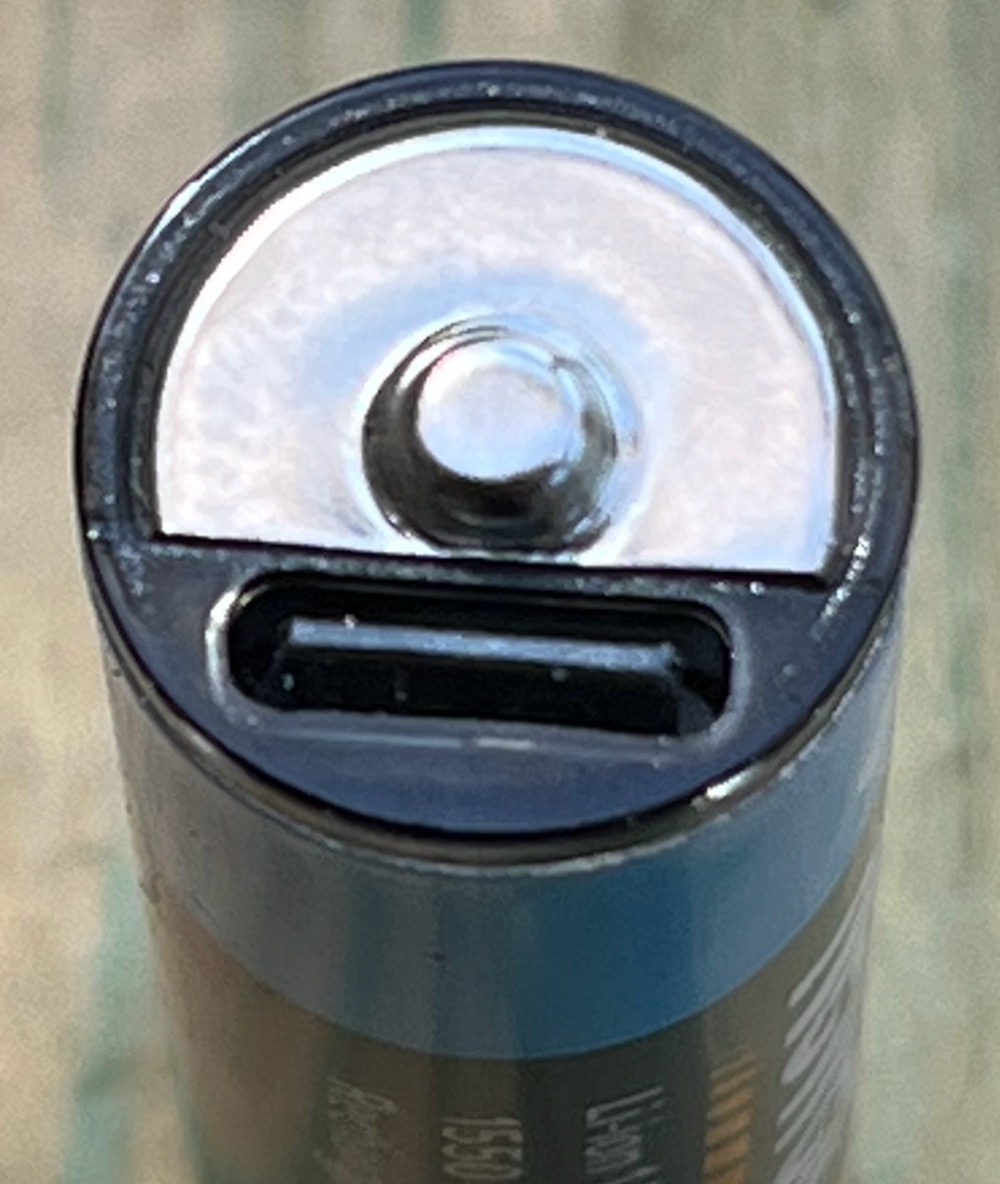
Enter the Newell Li-on Rechargeable's. These are different to the Eneloops. They have a built-in USB-C port for charging. No separate charger holder is required. Just a power-bank or mains charger.
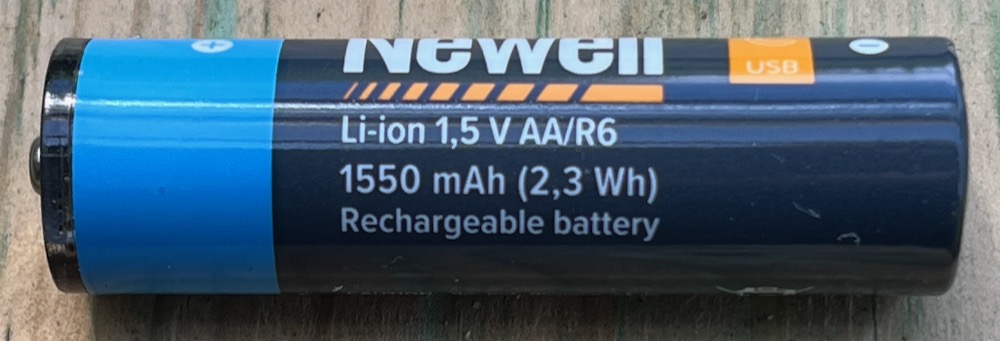
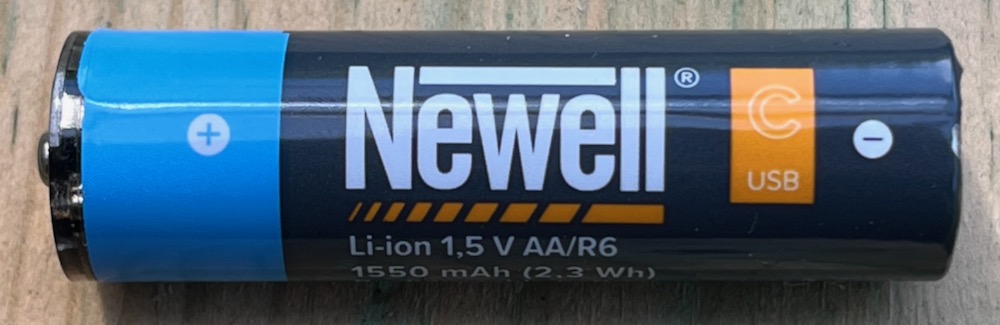
Garmin do issue dire warnings not to use Li-on batteries in the 66S. I thought I'd risk it as it's almost 'end-of-life' for me. Newells, as far as i can tell, are designed to be an easy replacement, like for like, for regular AA's, allegedly.
The chemistry is such that they seem not to 'fade'. They report full 100% voltage until they run out. This can be an issue in that you don't really know how much power you have left. Newell have designed their batteries to simulate fading a little bit, so you at least get some waring.
Easy to recharge with an included dual USB-C cable:
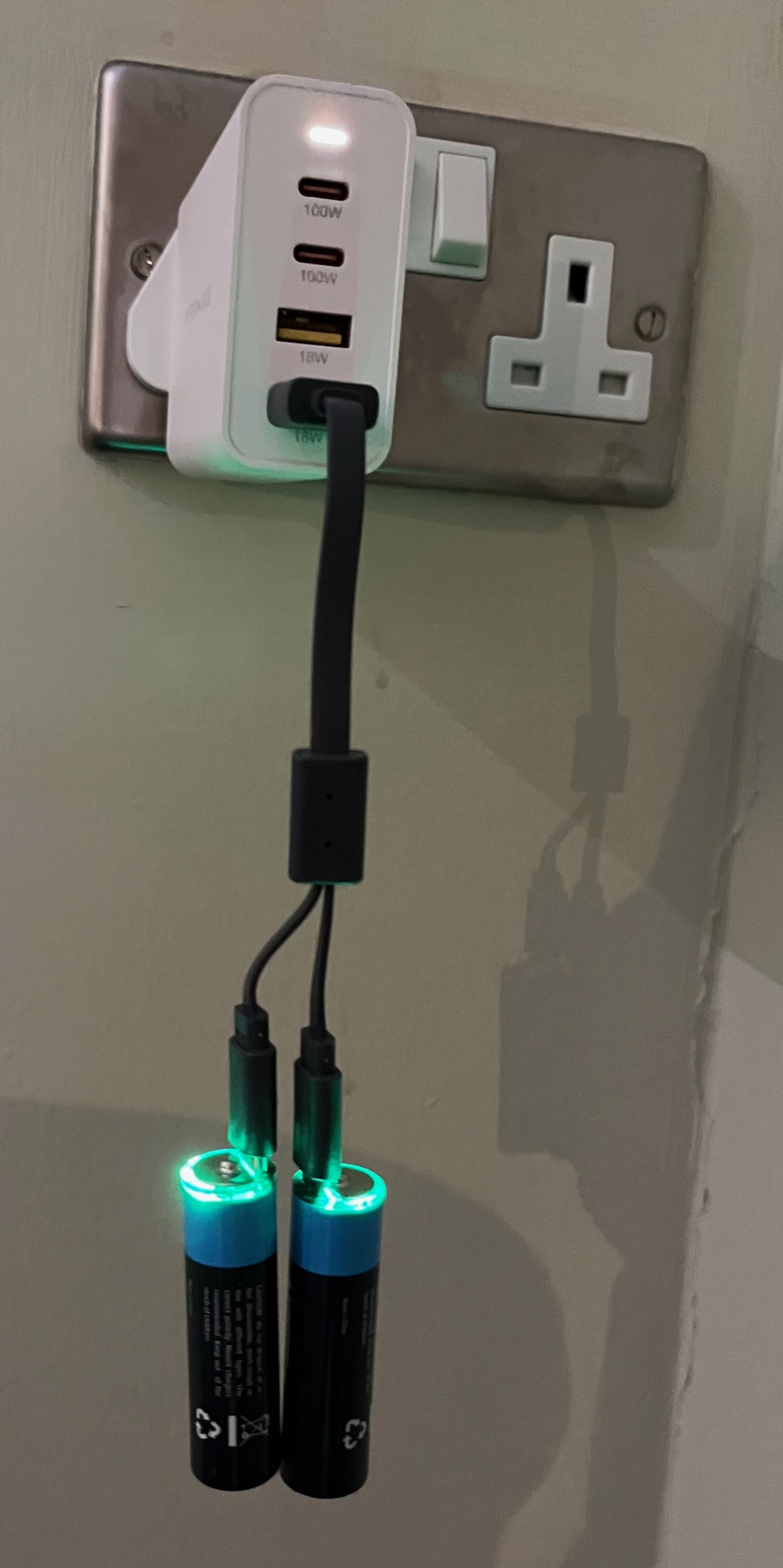
Remember to set the Battery to the right type in the 66S. I don't really know what that is! Probably none of them?
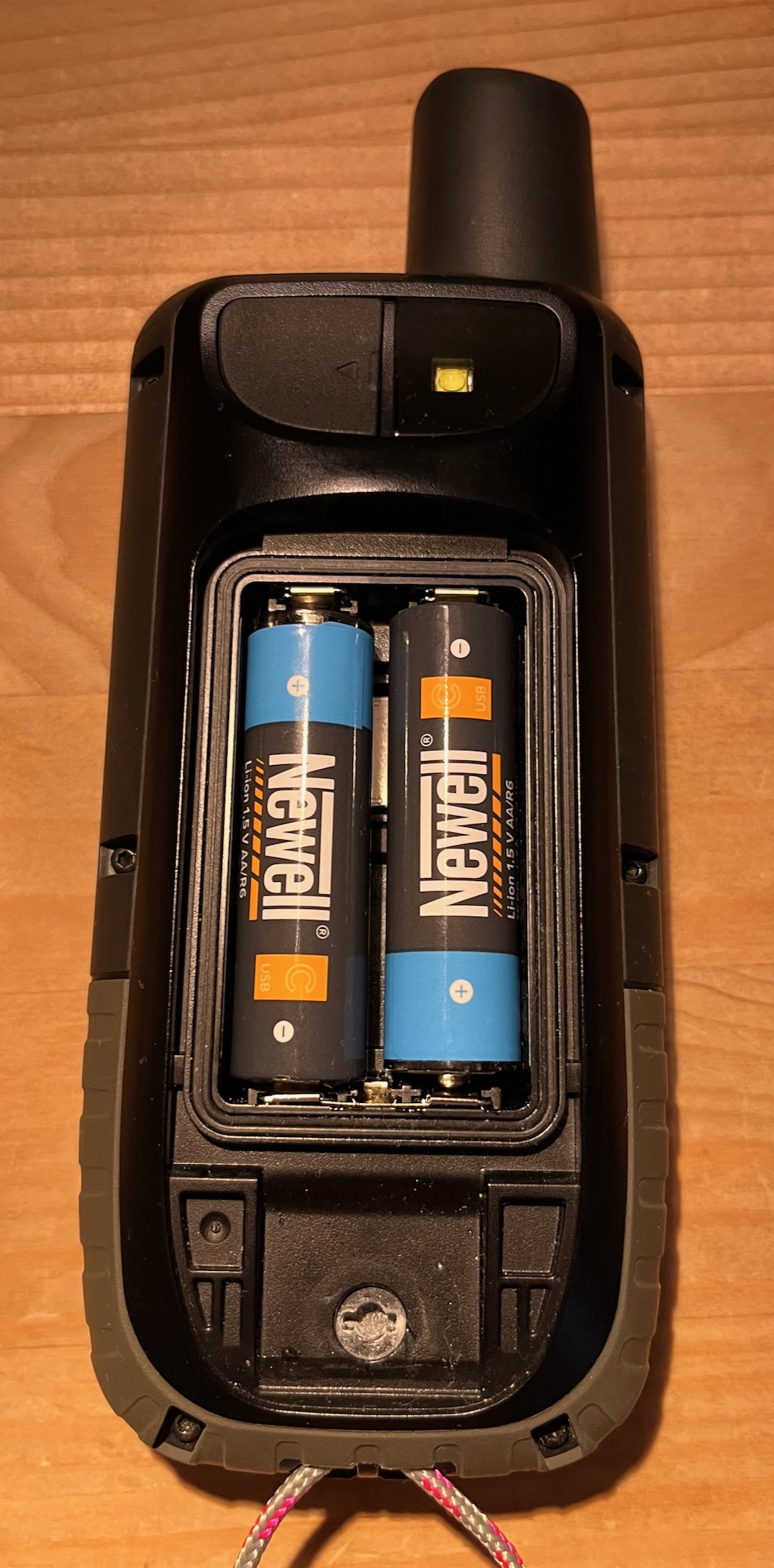
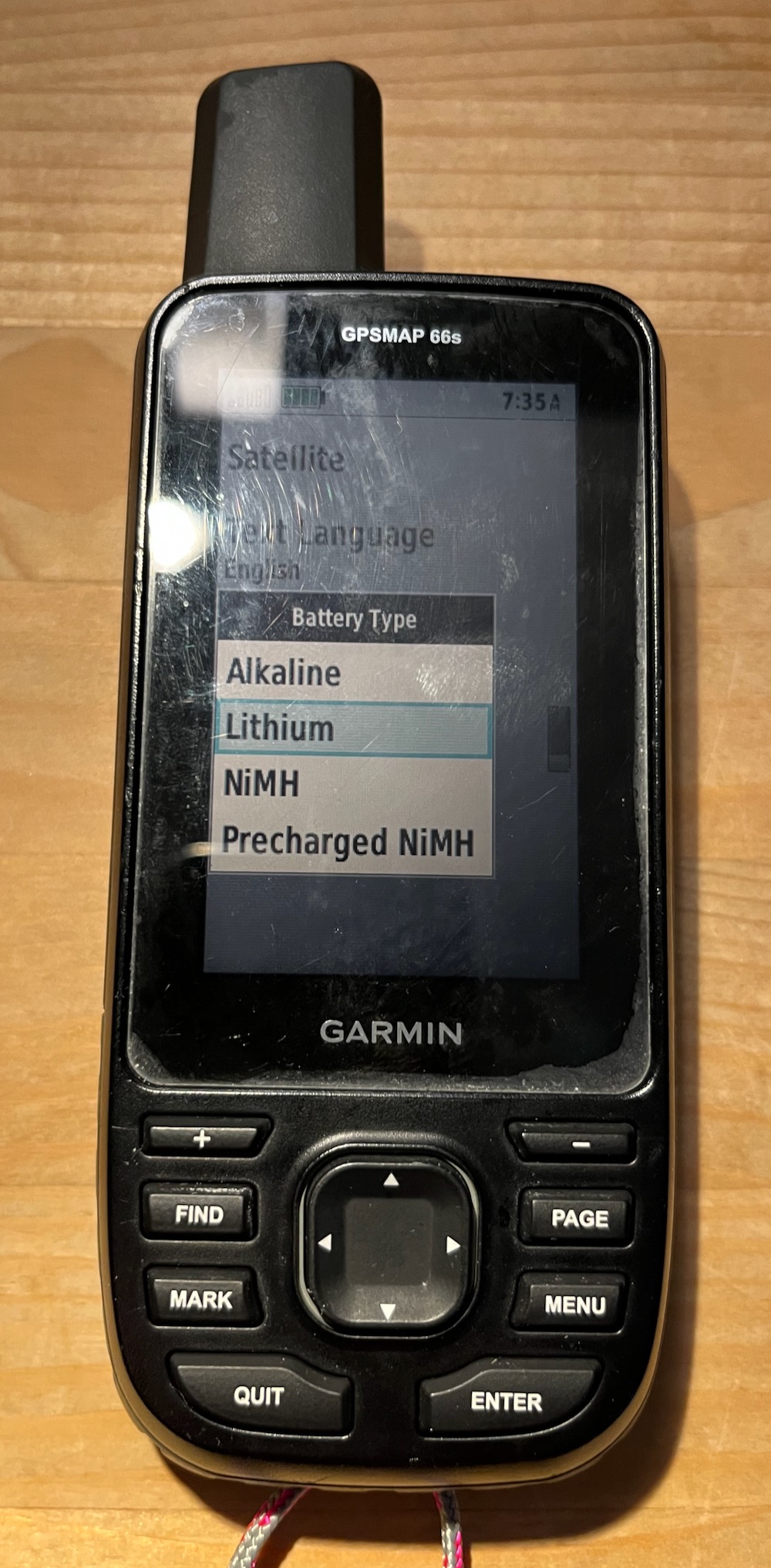
I have tried them out on a recent thru-hike (The Cumbria Way). They seemed to work fine and kept the GPS working all day. One section was about 9 hours of walking, and the meter still showed 100%. I guess I should test them until it dies really. 9 hours is plenty for a days sea-kayaking.
The latest GPSMAP in June 2025 is the 67i. This has a built-in battery which is fixed in place. I'm a bit reluctant to buy one of these right now as there isn't much difference GPS wise, for navigation on the sea at least, between the two. The software is more or less the same. The 67i does have newer internals and the battery does last a very long time. The 'i' means it also has Garmin's inReach 2 way Satellite comms too, which needs a monthly subscription to make use of. Trouble is, the inReach tech is 1st generation, the 2nd generation is much more useful.
In my view Garmin's inReach is increasingly becoming more viable, or affordable, for people like me who really don't like subscription based services. Once the one-off costs are paid there is now a 'Pay as You Go' monthly plan where you pay £7.99 a month and then per message or text or voice message, etc you send or receive. You can also suspend the monthly fee for up to 12 months when you don't want to use it, at no extra charge.
There is a 2nd generation Stand-Alone inReach Messenger plus device which is fairly new. You use it with your mobile phone to talk to the world. It has a new chipset that can do much more than the 1st generation that is everywhere else. But you don't really use this for live navigation, it's really just for 2 way comms when there is no mobile phone signal. I get the feeling that Garmin is under pressure to release or update all their other inReach devices to this new standard quickly. I think I might be tempted to update to a 68i whenever it's released. This would almost work like a Satellite phone really.
Two way off grid comms is developing and moving forward all the time, albeit a bit slowly. Garmin's inReach uses the Iridium Satellite constellation which one of the first ones to be setup over 20 years ago. It's now held back because of this. Their tech is over 20 years old, which is why using Satellite comms looks and feels like IT from the 80's, because it is! It's age means is it super expensive to try and modernise, any newer kit has to be backwards compatible, a bit of a nightmare for Iridium really. A strong +ve is it does work and is reliable right now, if you need it.
Competing, newer systems can be 'state of the art', at least for a little while. Many hold out the promise of direct mobile phone to Satellite connection too. Meaning we end-users can just use the mobile phone we already have. However - for rugged expedition use, any mobile phone can be a bit delicate and shouldn't't be relied on in all situations, so there will always be a need for robust kit, for me anyway.
I've used many Garmin GPS devices when sea-kayaking over the years. On land I tend to use a Fenix watch, which is great for having a map on your wrist. But on the sea I prefer a proper larger screen unit with buttons and an easy way to keep powered over many days.
It also has to sit securely on my spray deck so I can glance at it from time to time. Pressing any buttons easily to do various navigation things is good too. That's a topic really for another post I guess.
One important point: It's quite important to keep your eyes up to see where you are going, not 'head down' taking the GPS on a journey. I have been caught out like this when starting to use a GPS in the kayak, with potentially very serious consequences. Lesson learnt : won't happen again.
For a long time I used the Garmin GPSMAP series. Currently I have the 66S, which is no longer made. It's the last iteration where you can use your own AA batteries. I haven't used this on the boat for a few years. I'm still 'trying out' the Montana 700. I love the screen and ease of use on the Montana, once I'd figured out the best way to use it on my very wet spray deck! It's all good once underway. But I find it a bit of a pain to keep charged and not damaged when on land, getting in and out of the boat, etc.
The GPSMAP units are much smaller and lighter than the Montana. The screen is smaller, but works fine. Everything else is better: power management, only has physical buttons, less power drain, etc. A bit more minimalist really. I am after all in a tiny sea-kayak, not a yacht.
Back to the Power Issue. With the Montana my only real option is to use the Garmin PowerPacks. I have 2. One in the Montana and one in the PDF as a spare in case I run out of battery on the water. I've adopted a protocol of recharging the Montana at the end of every day with a PowerPack. At the start of every paddle in the morning the Montana is always at 100%.
With the GPSMAP 66S I used to cary a lot of Panasonic Eneloop AA's. These work great, but they take up space and are heavy.
I have a 3rd party battery pack that is supposed to be rechargeable in the 66S, but I've never got this to work reliably. Perhaps I should try the Garmin version?
Enter the Newell Li-on Rechargeable's. These are different to the Eneloops. They have a built-in USB-C port for charging. No separate charger holder is required. Just a power-bank or mains charger.
Garmin do issue dire warnings not to use Li-on batteries in the 66S. I thought I'd risk it as it's almost 'end-of-life' for me. Newells, as far as i can tell, are designed to be an easy replacement, like for like, for regular AA's, allegedly.
The chemistry is such that they seem not to 'fade'. They report full 100% voltage until they run out. This can be an issue in that you don't really know how much power you have left. Newell have designed their batteries to simulate fading a little bit, so you at least get some waring.
Easy to recharge with an included dual USB-C cable:
Remember to set the Battery to the right type in the 66S. I don't really know what that is! Probably none of them?
I have tried them out on a recent thru-hike (The Cumbria Way). They seemed to work fine and kept the GPS working all day. One section was about 9 hours of walking, and the meter still showed 100%. I guess I should test them until it dies really. 9 hours is plenty for a days sea-kayaking.
The latest GPSMAP in June 2025 is the 67i. This has a built-in battery which is fixed in place. I'm a bit reluctant to buy one of these right now as there isn't much difference GPS wise, for navigation on the sea at least, between the two. The software is more or less the same. The 67i does have newer internals and the battery does last a very long time. The 'i' means it also has Garmin's inReach 2 way Satellite comms too, which needs a monthly subscription to make use of. Trouble is, the inReach tech is 1st generation, the 2nd generation is much more useful.
In my view Garmin's inReach is increasingly becoming more viable, or affordable, for people like me who really don't like subscription based services. Once the one-off costs are paid there is now a 'Pay as You Go' monthly plan where you pay £7.99 a month and then per message or text or voice message, etc you send or receive. You can also suspend the monthly fee for up to 12 months when you don't want to use it, at no extra charge.
There is a 2nd generation Stand-Alone inReach Messenger plus device which is fairly new. You use it with your mobile phone to talk to the world. It has a new chipset that can do much more than the 1st generation that is everywhere else. But you don't really use this for live navigation, it's really just for 2 way comms when there is no mobile phone signal. I get the feeling that Garmin is under pressure to release or update all their other inReach devices to this new standard quickly. I think I might be tempted to update to a 68i whenever it's released. This would almost work like a Satellite phone really.
Two way off grid comms is developing and moving forward all the time, albeit a bit slowly. Garmin's inReach uses the Iridium Satellite constellation which one of the first ones to be setup over 20 years ago. It's now held back because of this. Their tech is over 20 years old, which is why using Satellite comms looks and feels like IT from the 80's, because it is! It's age means is it super expensive to try and modernise, any newer kit has to be backwards compatible, a bit of a nightmare for Iridium really. A strong +ve is it does work and is reliable right now, if you need it.
Competing, newer systems can be 'state of the art', at least for a little while. Many hold out the promise of direct mobile phone to Satellite connection too. Meaning we end-users can just use the mobile phone we already have. However - for rugged expedition use, any mobile phone can be a bit delicate and shouldn't't be relied on in all situations, so there will always be a need for robust kit, for me anyway.